
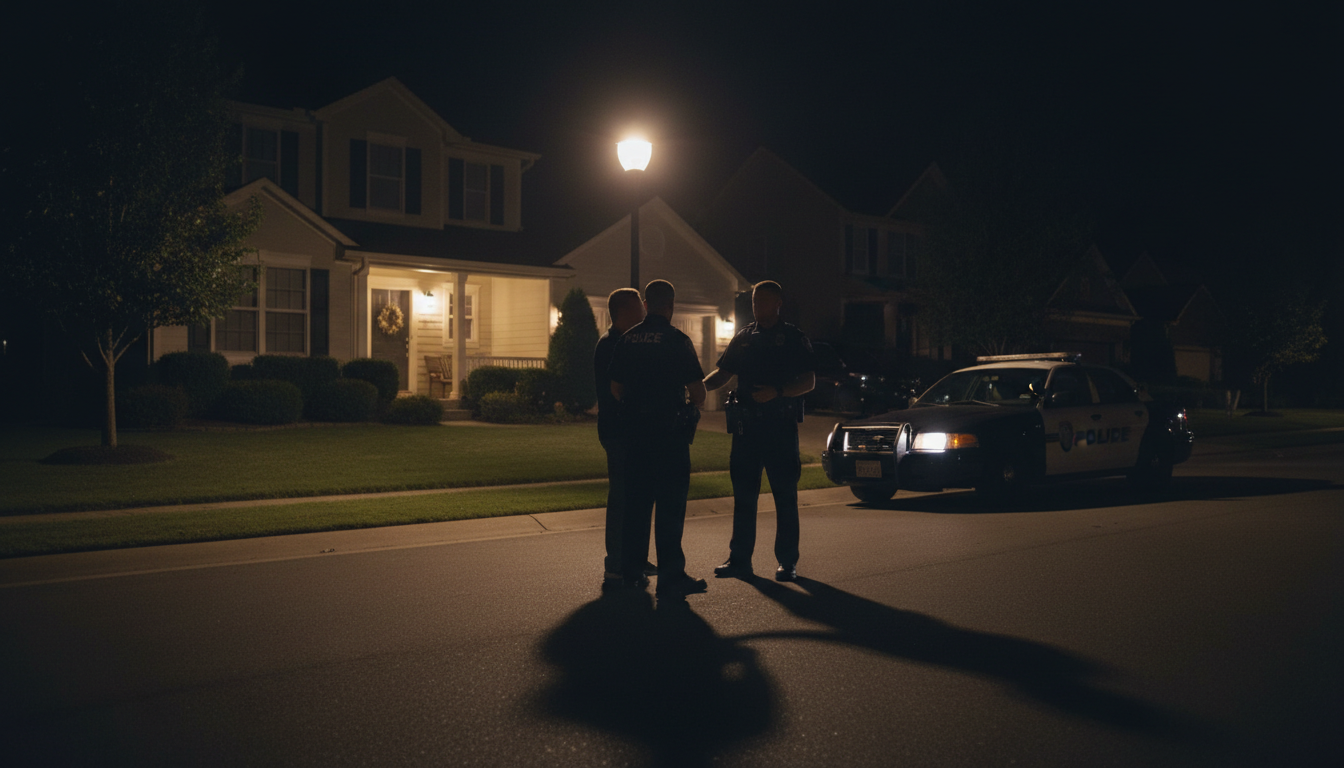
A domestic violence restraining order in California provides immediate legal protection by requiring an abuser to stay away and stop all contact with the protected person. The process is typically carried out quickly on an ex parte basis (meaning, without notice to the person accused of abuse), and involves filing court forms at no cost, attending at least one hearing; and if granted, securing a long-term order that can last for up to five years.
Dealing with the threat of domestic violence is an exhausting and rightfully frightening experience; but the prospect of entering a courtroom by yourself to seek protection can feel equally daunting. When your safety or the well-being of your children is at stake, you cannot afford to misunderstand the procedural nuances of a Domestic Violence Restraining Order. This legal tool offers critical protection, yet the path from filing an initial request to securing a permanent order involves strict timelines and rigorous evidentiary standards. Note, I said, a "permanent order." More on that in a minute.
In this post, we will break down the specific legal requirements for obtaining a DVRO in Los Angeles and Orange County. You will learn what constitutes qualifying abuse, how to prepare for your hearing, and what evidence is necessary to succeed. We will also address the potential impact these orders have on child custody and financial support, providing the sophisticated insight necessary to navigate this high stakes process with confidence.
What Qualifies for a Domestic Violence Restraining Order in California?
To seek a domestic violence restraining order in California, you must meet specific legal criteria defined under the Domestic Violence Prevention Act (DVPA). Many individuals mistakenly believe that the court only intervenes if there has been physical violence, such as hitting or shoving. However, the legal definition of abuse is much, much broader. It encompasses any behavior that intentionally or recklessly causes or attempts to cause bodily injury, as well as sexual assault, stalking, and harassment.
California courts also recognize disturbing the peace as a basis for protection. This can include destroying personal property, impersonating the petitioner online, or engaging in a pattern of coercive control that destroys the petitioner’s sense of safety and autonomy. Because these actions can be psychological or financial in nature, they still qualify for legal intervention if they occur within a specific type of relationship.
The second qualifying factor is the nature of your relationship with the respondent. Unlike a civil harassment restraining order, which applies to neighbors, coworkers, or strangers, a Domestic Violence Restraining Order requires a protected relationship under the Family Code. This includes:
Current or former spouses or registered domestic partners.
Individuals who live together or used to live together (cohabitants).
Individuals who are currently dating or were previously in a dating or engagement relationship.
People who have a child together.
Close relatives, including parents, children, siblings, or grandparents.
If your situation involves a roommate you have never dated or a neighbor, a civil harassment order is the proper legal remedy. For those navigating complex dissolutions or high-conflict family disputes in Orange or Los Angeles Counties, securing domestic violence protection is often the first step in ensuring safety, when such conduct qualifying for protection has occurred. Far too often, a DVRO is used as a sword to gain a strategic advantage in a dissolution or child custody action. It is a sickening reality, but the potential risk of denying a temporary order is far too great for the Court to ignore.
The Timeline: From Filing to a Final Order
Once you decided you need seek protection, which itself is often a huge milestone and one you should be proud of, the legal process moves through a rigid timeline designed to provide both immediate and, if proven, long-term security. The first potential event is the issuance of an Emergency Protective Order (EPO). This is typically handled at the scene of a domestic incident by a law enforcement officer who contacts a judicial officer on duty. An EPO is immediate but extremely temporary, lasting only five to seven calendar days to allow you enough time to reach the courthouse to file a formal request.
The second phase involves the Temporary Restraining Order (TRO). Many individuals ask how fast they can file a restraining order in California; the reality is that the court acts with significant urgency, almost always the same day, if you got it filed on time. If the judge finds the request sufficient, they will issue a TRO that generally remains in force for 21 to 25 days, which is the period leading up to your formal court hearing, at which time you (or ideally, your attorney) presents evidence and testimony supporting a finding that, unfortunately, domestic violence has occurred.
Once that finding is made, the process culminates in the issuance of a Permanent Domestic Violence Restraining Order. Note though, that "permanent" is a misnomer, as the DVRO can only remain in force for an initial period of five years. For those navigating the legal system in Orange or Los Angeles Counties, understanding these milestones is critical for maintaining safety while the parties, and the court, works toward a final resolution. If your five-year restraining order is coming up for renewal or termination, and conduct has occurred which may support renewal, a DVRO can potentially be made permanent.
Step by Step Process for Requesting Protection

The process begins with the completion of several mandatory Judicial Council forms. The foundational document is the DV-100, titled Request for Domestic Violence Restraining Order. In this form, you must provide a clear, chronological account of the abuse. It is essential to be specific about dates and the nature of the conduct. Alongside the DV-100, you will submit the DV-110 (Temporary Restraining Order), which the judge will sign if the request is granted, and the DV-109 (Notice of Court Hearing), which sets the date for your permanent order trial. Remember, as with many things in life, you only get what you ask for, so filling out the DV-110 correctly, is absolutely critical because that nine-page form will control what happens - who lives in the family house, where the kids live, and who gets to keep Rusty the Golden Retriever - at least until the full evidentiary hearing on your DVRO, is held.
California law mandates that there are no court filing fees for a domestic violence restraining order California. This ensures that financial barriers do not prevent victims from seeking domestic violence protection.
After the judge reviews your paperwork and (most likely) issues a temporary order, the next mandatory step is the service of process. You cannot legally hand the papers to the respondent yourself. The law requires that a third party, who is at least 18 years old and not involved in the case, personally delivers a copy of the filed documents to the respondent. This can be a friend, a professional process server, or the Sheriff’s Department. Proper service is a jurisdictional requirement; if the respondent is not served correctly, the court cannot proceed with the hearing to make the orders permanent. For those involved in complex dissolutions or high-conflict child custody disputes, ensuring that service is handled by a professional is often the safest and most reliable method to avoid procedural delays.
What Evidence Do You Need to Win Your Case?
Once the respondent has been served, the focus of your preparation naturally must shift to the evidentiary hearing, after all, typically you have only 21-25 days to become prepared, which is really not much time. A strategy often employed by those who are accused of domestic violence is to appear at the hearing on the day it is scheduled with an attorney, who will seek a continuance (and it will be granted, as a matter of law), leaving you feeling frustrated and maybe a bit like that attorney is engaging in gamesmanship. You are not wrong to feel that way, but understand the nature of what a finding of domestic violence can mean for the accused person. It is an extremely serious issue, and the Court safeguards against Constitutional infringements by permitting one (usually, just one) continuance "as a matter of right" - which means it if the accused party asks for it, they will get it, period. Going into the date for the evidentiary hearing with this understanding should help prepare you for its likelihood and reduce the emotional stress you would otherwise likely endure without this knowledge.
But, back to evidence. To obtain a permanent domestic violence restraining order California law requires you to meet the "preponderance of the evidence" legal standard. This means you must prove to the judge that it is more likely than not that the abuse occurred as described. Which, if you are the accused party, that is not the best news to hear, as "preponderance" is the lowest evidentiary standard, and unlike criminal proceedings that require proof beyond a reasonable doubt, the family court focuses on the weight and credibility of the information presented.
To build a compelling case for domestic violence protection, you should gather and organize specific categories of physical and digital evidence:
Digital Communications: Print copies of text messages, emails, and social media posts. Ensure these include date and time stamps to establish a timeline.
Visual Proof: Provide clear photos of physical injuries or property damage, such as broken doors, torn clothing, or smashed electronics.
Official Documentation: Secure copies of police reports, even if no arrest was made, and medical records that document visits related to domestic incidents.
Third-Party Records: In cases involving child custody disputes, logs from co-parenting apps or recordings of supervised exchanges can be vital.
Organization is just as important as the evidence itself. You should compile these items into labeled "exhibits." For instance, label your medical records as "Exhibit A" and your text messages as "Exhibit B." This allows you to reference them clearly during your testimony. While your verbal testimony is legally considered evidence, judges often face conflicting accounts from both parties. Corroborating your story with physical proof significantly increases the likelihood of a favorable ruling. In complex dissolutions, financial records showing coercive control or restricted access to funds can also serve as critical evidence of abuse.
What Happens at the Domestic Violence Restraining Order Hearing?

The hearing for a domestic violence restraining order California is the formal proceeding where the court determines if the temporary orders should be made permanent. You may appear in person or, in many cases, via a remote video platform. The courtroom will include the judge, a court clerk, a court reporter, and potentially a bailiff. As the petitioner, you sit at one counsel table, while the respondent sits at the other.
The judge acts as the trier of fact and will use your DV-100 as a roadmap for the proceeding. They will often ask specific questions to clarify the statements you made in your initial filing. When preparing what to say at a restraining order hearing, prioritize brevity and factual accuracy. You should focus your testimony on the most recent incidents of abuse or the most severe threats to your safety. Avoid generalities; instead, provide specific dates, locations, and actions.
Maintaining a professional and composed demeanor is critical. While these proceedings are deeply personal, emotional outbursts, yelling, or interrupting the judge or the other party can undermine your credibility. The court relies on evidence and testimony rather than volume or aggression to make its determination.
If the respondent contests the request (and it would be absurd if that person did not) the hearing becomes a mini trial involving the cross-examination of witnesses. Having a Certified Family Law Specialist is particularly important during this phase, but arguably throughout the entirety of the proceeding, not only for sufficient background, but developing testimony and evidence is a crucial aspect of representation many litigants often overlook. Having an experienced attorney in your corner from the beginning can ensure on the day of your mini-trial, that lawyer stands tall and ready with sufficient factual information in hand to combat retaliatory accusations, misleading evidence or testimony, and strong objections. A Certified Specialist can handle the complexities of questioning the respondent, objecting to improper evidence, and ensuring your domestic violence protection is not compromised by procedural technicalities. In cases involving child custody or complex dissolutions, the outcome of this hearing will have immediate and significant consequences on your broader family law matter, making expert representation a necessity.
Common Reasons a Restraining Order is Denied in California

Even with significant preparation, a request for a domestic violence restraining order California may be denied if it fails to meet the strict statutory requirements of the DVPA. One of the most common reasons for denial is the failure to establish a qualifying relationship. If the parties are not current or former spouses, cohabitants, or parents of the same child, the court lacks jurisdiction under the Domestic Violence Prevention Act. In these instances, the court may direct the petitioner to file for civil harassment instead.
Another critical factor is the staleness of the evidence. Judges often deny permanent orders if the most recent incident of abuse occurred several months or years ago without intervening threats or contact. The court prioritizes a present and immediate need for domestic violence protection. Furthermore, if the petitioner fails to demonstrate that the respondent’s conduct meets the legal definition of abuse, such as causing bodily injury or disturbing the peace, the request will be denied.
Procedural errors frequently lead to dismissals as well. If the respondent was not personally served in accordance with California law, the judge cannot proceed with the permanent hearing. These technicalities are often exploited by the opposing side to delay or defeat the request. Ensuring that every legal and procedural requirement is met is vital to maintaining the court's protection.
Custody and Financial Impacts of a DVRO
Securing a domestic violence restraining order California has profound implications that extend far beyond immediate physical safety. In cases involving children, the most significant legal impact is found in California Family Code Section 3044. This statute creates a rebuttable presumption that awarding sole or joint physical or legal custody to a person who has committed domestic violence within the previous five years is detrimental to the best interest of the child. For parents navigating child custody disputes, a sustained restraining order fundamentally shifts the legal landscape; it places a heavy burden on the restrained party to prove through specific, court-mandated factors that they are fit to have a custodial role.
Beyond custody, a DVRO serves as a powerful tool in complex dissolutions by addressing immediate financial and housing needs through move-out orders. The court has the authority to issue "kick-out" orders, also known as residence exclusion orders. These require the restrained person to vacate a shared home immediately, regardless of whose name is on the deed or lease, ensuring the protected party can remain in their residence safely.
Furthermore, the court can integrate financial relief directly into the protective order. A judge may order the respondent to pay temporary child support or spousal support and may even grant the petitioner temporary use and possession of specific community property, such as a vehicle or insurance coverage. Because these orders are (obviously) legally enforceable and carry significant weight in subsequent divorce proceedings, ensuring they are drafted correctly, or defended against vigorously, is essential for long term stability. At Salmons Family Law, we recognize that domestic violence protection is too often a regrettably necessary foundational step in what often becomes a larger legal battle, and we remain focused on securing a defensible outcome based on fact and legal precedent.