
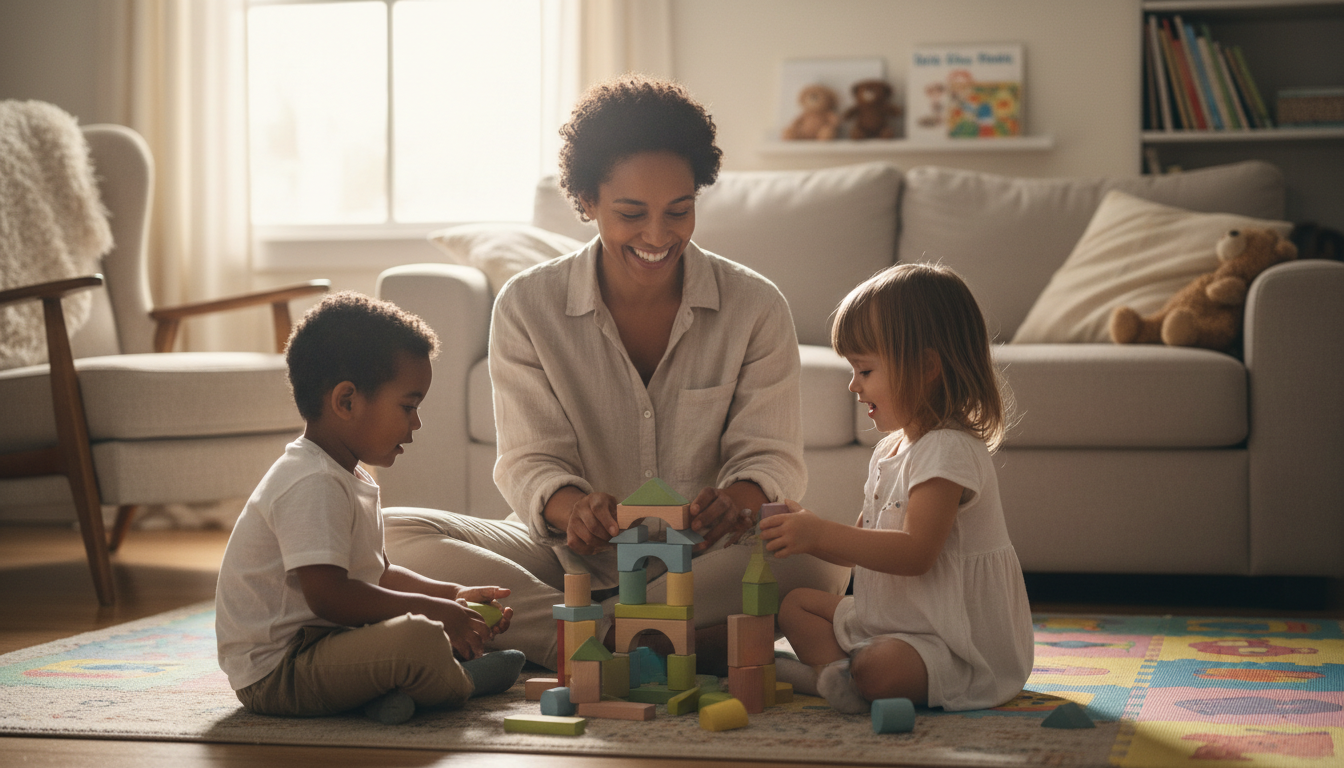
In California, the types of child custody come down to two basic ideas: legal custody, which is who makes the big decisions, and physical custody, which is where the child lives. Each can be shared by both parents or given to just one.
Child custody is often the hardest part of any California family law case. The labels alone, joint legal custody, sole physical residence, and the rest, can feel like more than any parent should have to decode while also maintaining stability and consistency for their children. But in California, these words are not just labels. They decide who makes life changing decisions and how your child's daily life is actually arranged. This guide breaks down legal and physical custody in plain language, explains what judges mean by the best interests of the child, and walks through the mediation and filing processes, so you can walk into Court with a clearer head.
Navigating Child Custody in California
Few legal issues hit as hard as a dispute over where and how your children will grow up. In the Superior Courts of Los Angeles and Orange Counties, parents often feel buried by the process and the high stakes. At Salmons Family Law, we do not treat these cases as the fight for control they often truly are, we view them as building a reasonable framework for your child's stability - which we believe should be the primary focus of every paren.
Getting sound child custody representation matters because California law rests on one idea: the best interests of the child. Judges in the family courts generally start from the view that frequent and continuing contact with both parents is good, as long as the child is safe. Every family is different, and that is where guidance from a Certified Family Law Specialist like James Salmons makes a real difference.
As you begin, try to look past the stress and focus on stability. If you want a resolution that puts your child's welfare first, please contact our office to talk through your situation.
The Difference Between Legal and Physical Custody

California law splits parental rights into two separate buckets: legal custody and physical custody. These two things do not move together. A ruling on one does not automatically decide the other.
Custody Type | Focus Area | Key Responsibilities |
|---|---|---|
Legal Custody | Authority and Decision-Making | Determining school enrollment, selecting healthcare providers, approving major medical treatments, and authorizing religious training. |
Physical Custody | Residency and Daily Supervision | Establishing where the child primarily lives, managing the daily routine, and providing immediate day to day care. |
Legal custody is about the big picture decisions. When parents share joint legal custody, they make major choices together, such as mental health treatment or which school district the child attends, no matter who the child lives with day to day.
Physical custody is about where the child lives and who handles the daily routine. This is where many parents get confused. In Southern California courts, it is very common for a judge to award joint legal custody to both parents while giving sole physical custody to one parent.
In that common setup, both parents keep an equal voice in major decisions, but the child lives mostly with one parent while the other has a set visitation schedule. Parents can also share both joint legal and joint physical custody, which takes a lot of cooperation day to day and on long term planning. Once you understand how these two types of child custody overlap, you can draft a realistic parenting plan that a Judge is more likely to agree with and protects your parental rights.
Legal Custody: Who Makes the Big Decisions?
Joint legal custody is the most common arrangement in Southern California, which reflects the state's public policy preference for shared parental responsibility. Under it, both parents keep equal rights to make decisions about the child's health, education, and welfare. Sole legal custody gives one parent that authority alone, usually when communication has broken down completely or there are real safety concerns.
Legal custody covers decisions such as:
Which school (or even preschool) the child attends;
Starting or continuing psychological, psychiatric, or mental health counseling;
Consent for elective medical procedures, vaccinations, or long term health care;
Religious activities and related education;
Getting a passport or allowing international travel.
One distinction surprises a lot of parents: even with joint legal custody, the parent who has the child at the moment handles the everyday choices, such as what they eat for dinner, what they wear, and their daily activities. Major milestones still need both parents to agree. A parent cannot unilaterally move the child to a new school district or switch pediatricians without the other's consent.
When parents cannot agree on a big decision, the dispute lands in the Superior Courts, where a judge decides for you based on the child's best interests. To avoid repeated court trips, many families use family law mediation to agree on clear decision making rules before conflict starts. We discuss the mandatory custody mediation in another post, please check out our main library.
Physical Custody: Where Will the Child Live?
Physical custody is about where the child lives and who supervises them day to day. In California, it is either joint or sole. A common myth is that joint physical custody always means a perfect 50/50 split. It does not. Joint physical custody simply means the child spends meaningful time with each parent. The schedule could be a 2-2-3 rotation, week on week off, or a 60/40 split, as long as both parents have frequent and continuing contact.
With sole physical custody, the child lives mostly with one parent, often called the primary physical custodian, but that phrasing isn't anything you'll find in the Family Code, it is created by attorneys and often reiterated by the Courts, although it is our opinion that avoiding such terminology is better for everyone involved. The other parent usually receives visitation, also sometimes called secondary physical custody. That parent stays a vital part of the child's life, of course, but the child's home base for school and logistics remains with the primary parent, with the other parent's time structured to preserve the bond.
Safety matters a great deal to the courts in Los Angeles and Orange Counties, as it should everywhere. In high conflict cases, a judge may order that exchanges happen in neutral, public places or police station lobbies, rather than curbside at either residence, to keep the focus on the child and avoid parental interaction. If you are dealing with a complicated living arrangement, child custody representation can help you secure a schedule that works.
Common Visitation and Parenting Time Schedules

Visitation orders exist to keep the child connected with the non custodial parent. In Southern California courts, these orders generally fall into four categories:
Scheduled visitation: A detailed plan for where the child will be on holidays, birthdays, and school breaks. This works well for parents who need clear boundaries to avoid conflict.
Reasonable visitation: Open ended orders that let parents work the schedule out themselves. This only works with strong cooperation and communication.
Supervised visitation: When a child's safety or well being is at risk, a judge may order visits monitored by the other parent, another adult, or a professional agency. Very often the cost of professional supervision will be born by the supervised parent.
No visitation: Reserved for extreme cases where any contact could be physically or emotionally harmful to the child.
Parents often ask which type of custody is best for a child. The answer is not straightforward, and certainly is not a label or a strict percentage. It is the arrangement that offers the most stability, safety, and continuity of care which Courts persevere to ensure. Beyond the immediate parents, Salmons Family Law also helps with grandparent visitation, which a court may grant when there is a pre-existing bond, although generally it must be noted that such visitation is difficult to obtain and will likely require a trial. If you are working to build a schedule, you can contact our Anaheim office to see how these options fit your family.
How California Courts Determine the Best Interests of the Child
Choosing among the types of child custody in California comes down to the best interests of the child, a legal standard set mainly by California Family Code Section 3011. In Anaheim and the surrounding Southern California courts, judges put the child's health, safety, and welfare above everything else.
Evidence of domestic violence or substance abuse carries heavy weight. If a parent has a history of abuse against the other parent, the child, or a romantic partner within the last five years, California law creates a presumption that giving that parent custody is not in the child's best interest. Beyond safety, judges look at the contact the child currently has with each parent and lean toward preserving stability while maintaining a relationship with both parents when it is safe.
Many clients worry about gender bias. It is worth stating clearly and definitively that California law is gender neutral. There is no statutory preference for mothers over fathers or the reverse, although we do understand how the emotional viewpoint of each parent may reach a different conclusion. The court's focus is intended to stay on which parent can provide a stable, supportive, and safe home.
As children get older, their own wishes can carry weight. Under the current family code, a child who is of sufficient age and maturity, usually 14 or older, must be permitted to tell the court their preference unless doing so would cause them harm. For younger children, the court may use a minor's counsel or a custody evaluator to understand the child's needs without putting them in the middle of the conflict.
Filing for Custody and the Role of Mediation

A custody case begins with filing a petition in the Superior Court, usually a Petition for Dissolution of Marriage or a Petition to Establish Parental Relationship. Once the papers are served, California law requires parents to go through child custody mediation with Family Court Services before a judge will hear the case. This step is there to help parents reach an agreement on the types of child custody in California without more litigation and further congesting the court calendar.
How mediation works depends on each county. In Los Angeles and Orange County, mediation is strictly confidential, which means the mediator does not send a recommendation to the judge if you cannot agree. The judge simply learns that no agreement was reached. Other counties are different, with a mediator writing a report and recommendation for the court, which is often adopted as the Order. Understanding how family law mediation works in your county can help you prepare. If you are outside Los Angeles or Orange County, please seek out the self-help resources available to you to gain an understanding of how the mediation process works in your county.
If mediation does not produce a signed parenting plan, the case moves to a contested hearing. Each parent presents evidence and arguments for their proposed schedule. These hearings are complex and often involve cross examining witnesses or evaluating expert reports, so having child custody representation on your side is critical. For help, you can contact our Anaheim office to schedule a consultation.
Knowing the difference between legal and physical custody is essential for any parent in the California court system. Whether you are working toward a joint arrangement or sole responsibility, understanding your rights helps you protect the outcome for your children. If you want expert help navigating the custody process, our team is here for you. We can help you build a stable future for your family with clear communication and dedicated advocacy.